
The Complete Guide to Personalised Fishing Shirts for Australian Businesses and Clubs
Discover how to order personalised fishing shirts in Australia — decoration methods, fabrics, MOQs, and tips for clubs, events, and businesses.

Written by
Reuben Hayes
Outdoor & Leisure
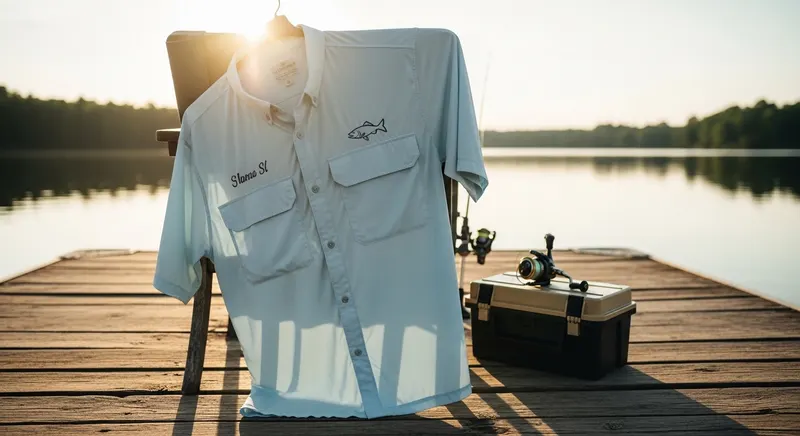
Fishing is one of Australia’s most beloved outdoor pastimes, with millions of Australians heading to the water each year — from the rivers of Queensland’s Gulf Country to the deep-sea charter boats off Fremantle and the trout streams of Tasmania. Whether you’re outfitting a fishing club, running a charter business, organising a tournament, or simply looking to reward a team with something genuinely useful, a personalised fishing shirt is one of the most practical and well-received pieces of branded apparel you can produce. Done well, it’s a walking advertisement that gets worn over and over again — not just shoved in a drawer. This guide covers everything you need to know to get it right the first time.
Why Personalised Fishing Shirts Make Excellent Branded Merchandise
At first glance, a fishing shirt might seem like a niche product. But when you consider the audience — anglers, outdoor enthusiasts, corporate team-building participants, fishing tournament sponsors, charter operators, and sporting clubs — the reach becomes significant. Unlike a branded pen or a tote bag, a quality fishing shirt serves a genuine functional purpose. People wear them because they want to, not just because they were handed one at a conference.
This functional value is what separates fishing shirts from many other promotional apparel options. A well-made fishing shirt protects the wearer from harsh Australian sun, keeps them cool on the water, and often includes handy features like rod holder loops, chest pockets, and UPF sun protection. When your logo or organisation name is printed or embroidered on a shirt that someone genuinely loves wearing, that’s brand exposure done properly.
For businesses operating in marine, outdoor retail, tourism, or recreation sectors, personalised fishing shirts also serve as a professional uniform solution. A charter boat crew all wearing matching shirts with the company logo looks professional and builds client trust immediately. The same logic applies to fishing clubs and associations wanting to build team identity and community.
Understanding the Different Types of Fishing Shirts
Before you place an order, it’s worth understanding the different shirt styles available, as they suit different applications and decoration methods differently.
Vented Long-Sleeve Fishing Shirts
These are the classic style — lightweight, typically made from polyester or nylon blends, with mesh ventilation panels under the arms or at the back. They’re designed for full-day sun exposure and are especially popular in Queensland, the Northern Territory, and Western Australia where UV index levels are extreme. Long-sleeve vented shirts are ideal for charter fishing operations and serious tournament participants.
Short-Sleeve Performance Fishing Shirts
More casual in appearance, short-sleeve fishing shirts made from moisture-wicking fabrics are popular for club merchandise, team events, and recreational use. They’re easier to produce at scale and often available in a wider range of colours. These tend to be the go-to option for fishing clubs placing bulk orders for members.
Polo-Style Fishing Shirts
A crossover between a traditional polo and a performance fishing shirt, this style works well for corporate applications — think fishing-themed team-building days, sponsor shirts, or corporate tournaments. If you’re also exploring related corporate apparel options, our guide to women’s polo work shirts and women’s polo shirts in Australia covers fabric, fit, and decoration choices in detail.
Hi-Vis and Safety-Rated Variants
For commercial fishing operations and aquaculture businesses where workplace safety requirements apply, hi-vis fishing shirts are available with custom decoration. It’s worth noting that printed branding must be positioned carefully to avoid obscuring safety features.
Choosing the Right Decoration Method
The decoration method you choose will depend on the fabric type, the quantity you’re ordering, and the look you want to achieve. Each method has different strengths.
Embroidery
Embroidery is the most durable and professional-looking option for fishing shirts, particularly on chest logos and sleeve branding. It holds up well through repeated washing and UV exposure — important for apparel that’s going to see heavy outdoor use. Embroidery works best on thicker woven fabrics and left-chest or sleeve placements. It’s the preferred choice for charter operators and fishing clubs wanting a premium, long-lasting finish.
Keep in mind that embroidery has a digitising setup fee (typically $30–$80 depending on complexity), but this cost is a one-time investment for your design file.
Sublimation Printing
Sublimation is ideal for polyester-based performance fishing shirts. It produces vibrant, full-colour prints that become part of the fabric rather than sitting on top of it — which means no cracking, peeling, or fading. It’s perfect for all-over designs, gradient logos, and photographic imagery. Sublimation is a popular choice for fishing tournament shirts where each team wants a visually striking, unique design.
The key limitation is that sublimation only works effectively on white or very light-coloured polyester fabrics, so it’s not suitable for every shirt colour.
Screen Printing
Screen printing remains one of the most cost-effective methods for bulk orders of fishing shirts. It works best on cotton or cotton-blend fabrics and is well-suited to simple logo placements in one to three colours. For larger orders — 50 shirts or more — screen printing offers excellent value. Refer to our detailed look at printed tee shirts for a thorough breakdown of how screen printing compares to other methods for custom apparel.
Heat Transfer
Heat transfer is a good option for smaller runs or designs with photographic detail that don’t suit sublimation. It works across a range of fabric types and can handle complex multi-colour artwork. Turnaround times are typically faster than screen printing for low quantities.
Minimum Order Quantities, Pricing, and Timelines
One of the most common questions organisations ask is: how many do we need to order? This depends on the supplier and the decoration method.
For embroidery, many Australian suppliers accept orders from as few as 6–12 pieces. Screen printing typically starts at 25–50 units to make the setup costs worthwhile. Sublimation-printed performance shirts often have MOQs of 20–50 units, though some suppliers offer lower quantities for small clubs or events.
Budget-wise, expect to pay anywhere from $35 to $90+ per shirt depending on the quality of the base garment, the decoration method, and the quantity ordered. Tournament-quality fishing shirts with full-colour sublimation will sit at the higher end; standard short-sleeve shirts with a single embroidered logo can be produced more economically.
Turnaround times in Australia vary. For in-stock shirts with embroidery or screen printing, allow 10–15 business days from artwork approval. Custom-manufactured or sublimated designs typically require 3–5 weeks. If you’re ordering for a specific event — say, a fishing competition in Cairns or a corporate fishing day on the Hawkesbury River in NSW — build in extra lead time and consider ordering samples first.
Artwork and Colour Matching Tips
Getting your artwork right before production starts will save significant time and frustration. For embroidery, supply vector files (AI or EPS) and be aware that very fine lines, gradients, and small text don’t translate well to stitching — your decorator may recommend simplifying the design slightly.
For sublimation, high-resolution files are essential — typically 300 DPI or higher at print size. If your brand has specific PMS colour requirements, discuss this with your supplier early, as colour accuracy varies between decoration methods. Screen printing offers excellent PMS colour matching; sublimation and embroidery are less precise but usually acceptable for most applications.
Matching Your Fishing Shirts with Complementary Merchandise
A personalised fishing shirt works even better as part of a coordinated merchandise package. For a fishing tournament or club membership pack, consider pairing shirts with:
- Branded caps or bucket hats — essential sun protection on the water
- Custom drinkware — a personalised travel mug or travel coffee cup is a practical reward for early-morning fishos
- Waterproof bags — our guide to waterproof bags covers what to look for in marine and outdoor environments
- Travel bags — for members or tournament participants travelling to events, explore our coverage of travel bags in Australia
- Event wristbands — useful for managing participant access at fishing competitions; see our guides on wristbands for events and event wristbands
- Custom towels — a gym and sports towel can double as a practical fishing accessory in a branded pack
- Custom umbrellas — for bank fishing or outdoor expo setups, wholesale umbrellas make a great branded addition
For clubs running seasonal promotions or summer tournaments, there’s plenty of inspiration in our broader look at summer branded merchandise in Australia.
Eco-Friendly Fishing Shirt Options
Sustainability is increasingly important to Australian outdoor enthusiasts and the fishing community — particularly given the direct relationship between environmental health and fishing. Many suppliers now offer performance shirts made from recycled plastic bottles (rPET fabrics), organic blends, or other sustainable materials without sacrificing performance.
If sustainability is a priority for your organisation or event, our guides to sustainable promotional products and sustainable promotional items will help you identify the right suppliers and questions to ask. Choosing recycled-fabric fishing shirts is a meaningful choice that aligns with the values of many fishing communities and conservation-minded sponsors.
Practical Tips for Clubs and Event Organisers
If you’re managing a fishing club’s merchandise or organising a tournament, here are some practical pointers to keep the process smooth:
- Collect sizes early — fishing shirts in performance fabrics often run differently to standard t-shirt sizing; always encourage members to check size guides
- Order a sample before full production — especially for sublimated designs where the print is permanent and non-returnable
- Plan for extras — order 10–15% more than you think you’ll need to cover late additions or size exchanges
- Standardise your colour palette — keeping your branded apparel consistent with your club colours across all items (including caps and bags) creates a cohesive, professional look
- Brief your artwork supplier clearly — provide any existing brand guidelines and specify where you want the logo placed on the garment
If you’re also managing other branded items for your club or event, tools like branded sticky notes for communications or promotional USB sticks for sharing event materials can round out a comprehensive merch suite.
Key Takeaways
Getting a personalised fishing shirt order right comes down to preparation, product knowledge, and choosing the right decoration method for your application. Here’s a quick summary to take away:
- Match the shirt style to the use case — vented long-sleeve shirts suit professional charter and tournament use, while short-sleeve performance polos work well for clubs and casual events
- Choose embroidery for durability and professionalism, sublimation for vibrant all-over designs, and screen printing for cost-effective bulk runs on lighter-coloured garments
- Plan ahead on timelines — allow at least 3–5 weeks for custom sublimated orders and build in buffer time for events
- Consider eco-friendly fabric options — rPET and sustainable materials are increasingly available and align well with the values of the fishing and outdoor community
- Bundle your fishing shirts with complementary merchandise — coordinated packs including drinkware, bags, caps, and accessories create a more memorable and impactful branded experience