
Custom Fishing Shirts Australia: The Complete Guide for Clubs, Teams and Businesses
Discover how Australian fishing clubs, charter businesses and events can order custom fishing shirts — decoration tips, MOQs, fabrics and more.

Written by
Reuben Hayes
Outdoor & Leisure
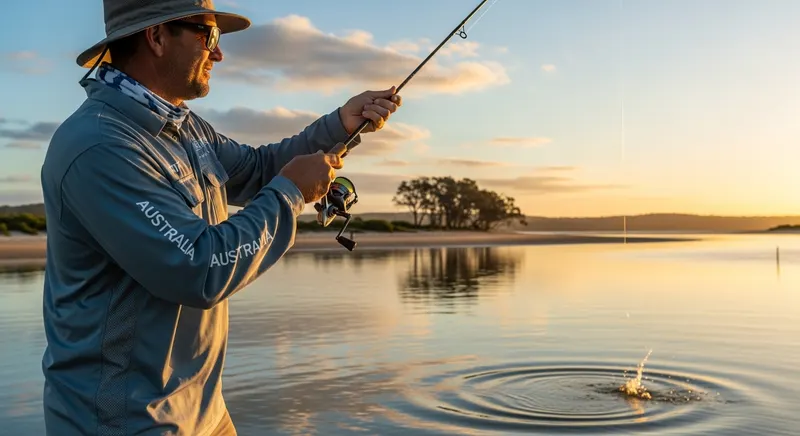
Whether you’re kitting out a fishing club on the Gold Coast, branding a charter boat business in Darwin, or sourcing merchandise for a fishing tournament in regional Queensland, custom fishing shirts in Australia are one of the most practical and visually impactful pieces of branded apparel you can invest in. Unlike a standard corporate polo worn at a trade show, a fishing shirt needs to do serious work — protect against UV, manage moisture, and hold up through salty spray, sweating rods, and long hours in the sun. Getting the right product, decoration method, and ordering process sorted before you commit to a bulk run can make the difference between shirts your crew loves wearing and a box that ends up sitting in the shed.
This guide covers everything you need to know about ordering custom fishing shirts in Australia: what to look for in a performance fabric, which decoration methods work best, how much you should budget, and what pitfalls to avoid.
Why Fishing Shirts Are a Smart Branding Investment
For any organisation with a connection to the water — fishing charters, bait and tackle shops, boat clubs, angling associations, or outdoor event sponsors — branded fishing shirts offer exceptional return on investment compared to many other promotional products.
Consider the use case: a well-made fishing shirt worn on a charter boat trip gets seen by every passenger, at the marina, at the weigh-in, and on social media. It’s wearable advertising with genuine utility. Customers who receive a quality performance fishing shirt are far more likely to wear it repeatedly than a cheap cotton tee that fades after a few washes.
From a branding standpoint, fishing shirts also offer large decoration areas — typically across the back yoke, left chest, sleeves, and collar — giving organisations plenty of real estate to showcase a logo, sponsor names, or competition branding. This makes them particularly valuable for fishing tournaments and competitions where multiple sponsors need acknowledgement.
What Makes a Good Custom Fishing Shirt?
Before you dive into logos and colours, it’s worth understanding what separates a great fishing shirt from a mediocre one. Performance fishing apparel is genuinely specialised, and not all shirts advertised as “fishing shirts” are created equal.
Fabric and UPF Protection
The single most important feature of a fishing shirt is UV protection. Anyone spending extended time on the water in Australia — where UV radiation is among the highest in the world — needs genuine UPF 50+ rated fabric. Look for shirts made from polyester or nylon-blend fabrics with a tight weave, which block UV rays more effectively than loose cotton weaves.
Moisture-wicking capability is equally important. Performance polyester fabrics pull sweat away from the skin and dry rapidly, keeping the wearer comfortable across long sessions. For heavy fishing environments like the tropics around Darwin or Cairns, this can be the difference between a shirt someone wears enthusiastically and one they shed the moment they step off the boat.
Venting and Breathability
Many quality fishing shirts incorporate mesh venting panels — typically under the arms or across the back — to maximise airflow. If you’re sourcing shirts for a charter operation in Far North Queensland or the Kimberley, vented shirts are worth the small extra cost. They’re noticeably more comfortable in extreme heat and humidity.
Fit and Style
Fishing shirts typically come in two core styles: button-up long-sleeve shirts (the classic fishing guide look, often with roll-up sleeves secured by a tab) and performance polo or crew-neck shirts. Button-up styles offer more UV coverage and a more professional charter guide aesthetic. Polos tend to suit fishing clubs, community tournaments, and casual branded use more naturally.
For clubs with female members, consider ordering separate cuts. A women’s-specific fit makes a significant difference to comfort and wearability — much the same principle applies when ordering women’s polo work shirts for corporate environments.
Decoration Methods for Fishing Shirts Australia
Choosing the right decoration method is critical for performance fabrics. Get this wrong and you’ll end up with cracked prints, puckered embroidery, or logos that fade after a handful of washes.
Sublimation Printing
For high-performance polyester fishing shirts, sublimation printing is often the gold standard. Sublimation bonds ink directly into the fabric fibres rather than sitting on top, resulting in a print that won’t crack, peel, or fade — even after repeated washing and UV exposure. It’s ideal for full-colour, all-over designs and photographic-quality imagery.
The trade-off: sublimation only works on white or very light-coloured polyester fabrics. It also typically requires full minimum order quantities and longer lead times for custom garments.
Heat Transfer (DTF)
Digital-to-film (DTF) heat transfer is increasingly popular for branded fishing shirts in smaller quantities. It handles full-colour designs well and works across a broader range of fabrics than sublimation. It’s a practical option when you need smaller runs — say, 12 to 24 shirts for a club committee — and still want a high-quality finish.
Embroidery
Embroidery is a durable, premium-looking option for chest or sleeve logos. It works exceptionally well on thicker fishing shirts and button-ups where the fabric can support the stitch weight without puckering. It’s a popular choice for charter boat uniforms and fishing club caps paired with shirts. For high-performance lightweight fabrics, however, embroidery can sometimes distort the fabric — always request a sample or sew-out before approving a full run.
Screen Printing
Screen printing suits mid-weight polyester or poly-cotton fishing shirts well, particularly for simple one-, two-, or three-colour logo designs. It delivers excellent colour consistency across large runs (generally best from 50+ units) and works beautifully when you want PMS-matched brand colours. It’s worth noting that screen printing on fully synthetic fabrics can sometimes result in dye migration — a quality printer will advise you on this and use appropriate inks.
Practical Ordering Tips for Fishing Shirts
Know Your Minimum Order Quantities
MOQs for custom fishing shirts vary considerably depending on the supplier and decoration method. Sublimated custom-cut garments often require a minimum of 20–50 units. Screen-printed or embroidered runs on blank stock typically start from 12–25 units. If you need smaller quantities — for example, a handful of guide shirts for a boutique charter operation — expect to pay a premium per unit or explore DTF printing as a cost-effective alternative.
Budget Realistically
Quality performance fishing shirts with custom decoration aren’t cheap — and they shouldn’t be. Budget roughly $40–$80 per shirt for a quality product with professional decoration, depending on garment spec, decoration complexity, and quantity. Specialist charter and competition shirts with custom sublimation can run higher. The good news is that these shirts have a long lifespan and high perceived value, making the cost-per-impression genuinely competitive.
Plan Your Artwork Early
Performance fishing shirts often have seams, panels, and vents that affect print placement. Ensure your artwork is provided as a vector file (AI or EPS), and discuss logo placement with your decorator before the artwork is finalised. A Brisbane fishing tournament, for example, might want the main competition logo across the back, sponsor logos on the sleeves, and a small club crest on the chest — all of which need to be mapped out in a proof before print approval.
Don’t Neglect Turnaround Times
For event-based orders — tournaments, club registration days, charity fishing competitions — always build in generous lead time. Standard turnaround for custom-decorated stock garments runs 10–15 business days, while fully custom sublimated shirts can take 3–6 weeks. Add buffer time for artwork revisions and sample approval.
Complementary Branded Products to Order Alongside Fishing Shirts
Fishing shirts are often just one part of a broader merchandise mix. Here are some categories worth considering alongside your apparel order.
Branded drinkware is always in high demand on the water. A sport water bottle with a club or charter logo is a practical giveaway that gets used every day. If you’re packaging merchandise for a tournament prize pack, consider adding a travel coffee cup or travel mug for early-morning starts.
For the travel side of fishing — particularly tournaments where participants drive or fly interstate — travel bags or a waterproof bag for gear protection are valuable branded additions. A roller bag printed with a fishing club logo makes an impressive prize or member gift.
Fishing clubs running registration days alongside their apparel launch might also consider branded lanyards for event passes or membership cards.
And if you’re exploring a broader summer merchandise campaign, our guide to summer branded merchandise in Australia covers the full landscape of products suited to the warmer months.
Sizing, Sizing Charts, and Inclusivity
One often-overlooked aspect of ordering custom fishing shirts is ensuring your size run is inclusive. For a fishing club with members ranging from teenagers to seniors, a narrow size range will leave people out. A good rule of thumb for community groups is to order from XS through to 3XL or 4XL, and to offer both unisex and women’s cuts where possible.
If you’re new to sourcing customised apparel, our guide to shirts and polos covers general sizing and style considerations that apply equally well here. For those exploring other performance styles, the women’s polo shirts Australia guide is also worth a read.
Eco-Friendly Fishing Shirts: A Growing Consideration
There’s growing demand — particularly among conservation-minded fishing communities — for apparel made from recycled materials. Fishing shirts made from recycled PET (rPET) polyester derived from plastic bottles are now widely available and offer performance comparable to virgin polyester. These align well with environmental messaging for organisations focused on sustainable fishing practices. Our overview of sustainable promotional products explores this category in more detail.
Conclusion: Key Takeaways for Ordering Custom Fishing Shirts in Australia
Ordering the right fishing shirts in Australia comes down to balancing performance, aesthetics, decoration method, and budget. Here’s a quick summary of what to remember:
- Prioritise UPF 50+ and moisture-wicking fabrics — Australian UV conditions demand real performance, not just a stylish label
- Match your decoration method to your fabric — sublimation for full-colour polyester, embroidery for heavier button-ups, DTF for shorter runs
- Plan artwork and placement early — panel seams, vents, and multi-sponsor layouts need careful proofing before print approval
- Order inclusive size ranges — cater for the full spectrum of your members, staff, or participants, including women’s-specific cuts
- Build adequate lead time — especially for custom sublimated garments or tournament deadlines where delays aren’t an option
- Bundle your order with complementary products like drinkware, bags, and accessories to maximise shipping efficiency and brand consistency
With the right planning, custom fishing shirts become a cornerstone piece of branded apparel that your club, crew, or customers will wear with genuine pride — on the water and well beyond it.